


Definition: An attempt to influence another’s behavior for one’s own benefit; to control
Characters in Literature: The pig Napoleon (Animal Farm); Melisande (Kushiel’s Dart); President Snow (Hunger Games trilogy) and, not a book, but I’d be remiss if I didn’t mention Dr. Gregory House!
Common Portrayals: Loan sharks; car salesmen; the popularity crowd; the head cheerleader or ‘it’ girl in school, the shrewd boss or co-worker.
Clichés to Avoid: Conniving politicians, manipulation to gain acceptance as a plot device (Hazing, breaking the law for a gang initiation, etc); the popular & manipulative cheerleader/rich girl/prom queen-to-be forcing others to bend to her will in order to curry favor; beautiful women who use their looks to get people to do what they want; strong-arming military figures, underhanded governments, etc.
Twists on the Traditional Manipulative Character:
▪ Most manipulators see themselves as being ‘in the right’ and so feel it’s okay to manipulate in a given situation. However, sometimes incredible characterization comes out from people who are not born manipulators. Take Peeta from the Hunger Games…manipulating the Capitol audience during talk shows is something he does well, yet goes against his nature. Show us scenarios like this where the need causes manipulation to come out as a characteristic when it is not natural to do so.
▪ Most manipulators in fiction are very intelligent and shrewd. Try pairing manipulation with someone of lower intelligence, or someone who sees themselves as influential but really…they suck at it.
▪ Again, most cases of manipulation seem to come with strong intent and the character embracing their own sneaky or shrewd nature. Show us a character who knows they have a tendency to be manipulative or influential, but they fight against it from a desire to not be that way
GOOD NEWS!
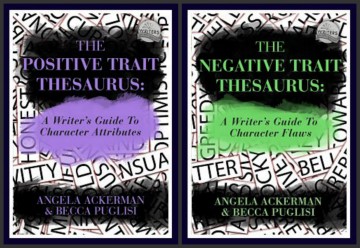
This sample, along with the rest of the character trait entries, has been expanded into book form! Together, THE NEGATIVE TRAIT THESAURUS: A WRITER’S GUIDE TO CHARACTER FLAWS and THE POSITIVE TRAIT THESAURUS: A WRITER’S GUIDE TO CHARACTER ATTRIBUTES contain over 200 traits for you to choose from when creating unique, memorable characters. Each entry contains possible causes for the trait, as well as positive and negative aspects, traits in supporting characters that may cause conflict, and associated behaviors, attitudes, thoughts, and emotions. For more information on this bestselling book and where it can be found, please visit our bookstore.
Love working online and having your favorite description resources in one place? We’ve got you covered. The entries from the Negative Trait Thesaurus book have been integrated into our online library at One Stop For Writers. Now you can search and cross-reference between all our thesaurus collections quickly and easily. Interested in viewing a free sample? Register at One Stop and see all that this intuitive library for writers has to offer.





31 Comments.
[…] Manipulative […]
[…] Manipulative […]
I was a big follower of your emotional thesaurus & then I sort of disappeared and forgot to renew my domain name & lost my blog content and all. I am starting over and had to visit you. I did visit quite a bit during my blogging hiatus while I finished my book (your blog was invaluable)
I love the character traits & I am glad to be back.
Melissa
like the magician.
A great post again, thankyou.
Man, do I hate being manipulated. There are the simple ones, too. Those people who manage to convince you to do something that isn’t right! Like little old ladies. And nuns. (What can I say? I went to Catholic school.)
I love this post! Manipulators really do make for interesting characters, although I’d rather not deal with them in real life.
>>Try pairing manipulation with someone of lower intelligence, or someone who sees themselves as influential but really…they suck at it.<< This describes my main antagonist exactly. It's really fun writing a character who's deluded about his own ability to manipulate. Great post, as always.
hi miss angela! wow! i didnt ever think bout all this minipulating stuff. for sure it could be a neat character if you do it just right.
…hugs from lenny
Wonderful post. But, can you believe it I don’t have a favourite manipulator. Will think and create one in my book.
I’m doing preplanning on my latest project, and will be hanging out here tons as I figure out my characters. 😀
Sometimes I wish I could give blog posts five stars.
Super post! I agree that everyone real or fictional can be manipulative when they either want to or need to.
I like the honesty, that pretty much everyone manipulates at certain times, to certain degrees. Great job!
Dr Gregory House definitely fits under this category. Great show although I haven’t watched any of the last season.
The manipulator–who may well be on the line as “villain” too. I stopped watching House because I couldn’t figure out how so many were fascinated by him. But it wasn’t the man, it was the deeds. People love to hang around and see him get his due. Of course, it hasn’t happened–yet. Great post!!
Awesome info!
I use to love watching House, just so I could watch how he manipulated people. But he crossed the line for me last season after the way he treated Cuddy.
So write about manipulators, but don’t make them too bad because you’ll lose your audience.
I love this post… it is so true. Now, I just need to see how to write a character form this POV… and make it feel right.
thx
House irritates me to no end. I can only take about 10 or 15 minutes of the show and I’m pissed off. Consequently I hardly ever watch it.
Gandalf was a manipulator too.
You’ve got some great examples of manipulators here and ideas on how to twist it to be unique. Thanks for the great post.
Great post! Unfortunately you’re making me think of this jerk ex co-worker and my mother in law. Excuse me while I hit my mental “delete” button…..
A timid manipulator–that would be an interesting combination!
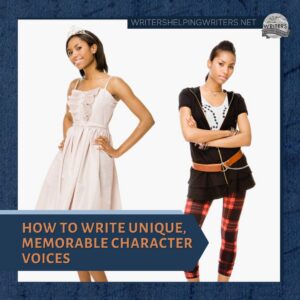
Hah! That photo is absolutely perfect for this post. 😀
Ooh this one is a good one, Angela! Love how you used Peeta as an example.
I love House and you are right, he’s incredibly manipulative. I’ve read that the character is styled after Sherlock Holmes. I haven’t read any Holmes but if this is true…mayhaps Holmes was also very manipulative in the books.
Scarlett O’Hara is a fantastic example. I agree with Angela that we’ve probably all manipulated at some point in our lives – I know I have. However, there are people who make a career out of it. They’re a pain in real life, but their qualities can make for great characters!
I think everyone is guilty of some manipulation from time to time–sweet talking a sales associate to go the extra mile for us in a store, using reverse psychology on a child to achieve a certain behavior or goal, reading someone’s body language and emotions and behaving in a way that compliments it rather than works against it, etc.
However, manipulation as an actual characteristic goes beyond all of this. It’s where manipulation is a strong enough component of the personality where that line of right and wrong is blurred, and it is used without thought to achieve what is needed in any situation that requires it. I think this is what makes the difference.
Thanks for the comments, everyone! You guys rock!
Angela
This is a great resource! Thanks!
Some take advantage of their own weaknesses to control and manipulate others. Might be a physical weakness, or economical, or mental, whatever, but they know just how to use other peoples’ sympathy to get what they want.
ooo…. awesome suggestions here! Manipulation can work in so many ways too! Often it can be the quiet, sweet mom who plays guilt trip on her kids to get work done around the house. But I’d never do that… nuh-uh… not that kind of mom at all. 😉
My favorite manipulator? Scarlett O’Hara. The part where she gets her sister’s beau to propose to her (because she needs his money to save Tara) was great.