


I’m reading a novel right now. It started out okay, but somewhere around chapter five, I noticed I was skimming—just moving my eyes across the page as fast as I could, trying to get to the next thing.
And here’s what I know about myself as a reader: when I’m truly hooked on a story, I don’t skim.
So when I caught myself skimming, that was my brain telling me it was bored. And I keep thinking, does the author know? Because I think if they did, they would want to fix it.
So how can you tell if your own story is holding together the way it should, enough to make a reader care?
Why Your Story Won’t Keep Readers Hooked With Beats Alone
In this novel, the problem is story structure. The author is a good writer. They excel in dialogue and setting, and I imagine they thought they were following a structure.
But good story structure is not only about hitting the right beats on a chart. You can hit every major turning point exactly where some expert told you to put it and still have a story that feels dull, boring, or hard to care about.
We’re going to look at five places where the reader can start to disengage, even when the writing itself seems fine.
And for more help walking through these five steps, grab my free worksheet.
Check 1: The Story Path
The first place you want to check is the story path, because this is where a lot of structure problems begin.
Your reader’s brain is always trying to build a sense of direction. It’s tracking what changed, what the character wants now, and what kind of story it’s being asked to follow.
So the first question to ask is this: Does your main character have something clear to pursue?
That pursuit could be external. Maybe they’re trying to solve a murder, escape a dangerous place, save their family, win back a kingdom, find a missing person, or finish something they started years ago.
It could also be more emotional. Maybe they’re trying to prove themselves or hold on to a relationship.
The best stories usually have both.
Think about The Wizard of Oz. Dorothy’s external goal is very clear. She wants to get home.
That gives the audience a path to follow. We understand why she’s going to see the wizard, why she keeps moving down that yellow brick road, and what she hopes to find at the end.
Underneath that, there’s also an emotional path: Dorothy has to come to understand what home even means to her.
So the story gives us something simple to follow on the outside and then something deeper to feel on the inside.
That’s what you’re looking for in your story. Because if your character is just being pulled from one scene to the next, the story may start to feel shapeless.
If you’re checking your own structure, start there. Ask:
- What does my character want on the outside?
- What are they struggling with on the inside?
- Can the reader feel both of those paths early enough in the story to care?
Check 2: The Chain of Events
The second place you want to check is the chain of events.
Once the reader understands what the character wants, their brain starts tracking how one thing leads to the next.
And this is a big part of why some stories feel satisfying and others just kind of feel “there.”
The reader wants more than “things happening.” They want things to happen because of what came before.
So it’s not this happened, then that happened, then this happened, and the poor character is caught up in all of it.
It’s this happened, so the character decided to do this. When they made this choice, this problem showed up. Then they had to do this.
That is what helps the story feel connected.
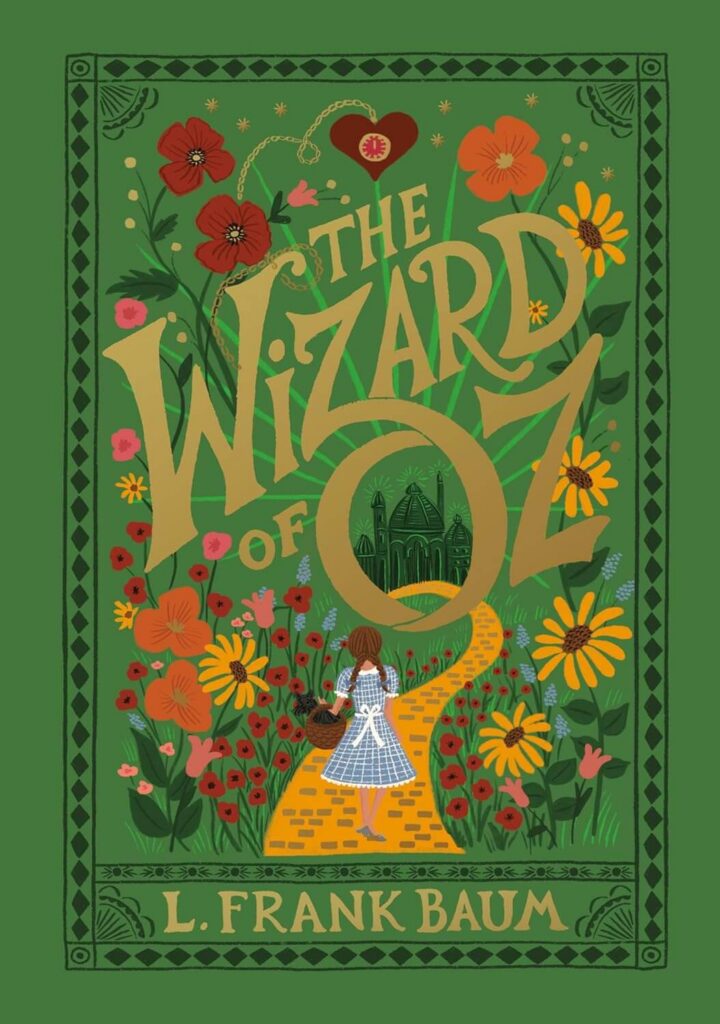
In The Wizard of Oz, Dorothy doesn’t randomly end up at the Emerald City. The tornado drops her house, and she wants to get home. Glinda tells her to follow the yellow brick road, so she decides to do that.
Along the way, she meets the Scarecrow, the Tin Man, and the Lion, and each one joins her because they also want something from the wizard.
So the story keeps moving because each step makes sense from the step before it.
If you’re checking your own structure, ask:
- Does this scene happen because of something that happened before, or is it just happening?
- And is my hero driving the action?
Check 3: The Emotional Stakes
The third place you want to check is the emotional stakes, because your reader’s brain is tracking what happens next, and it’s also tracking why it matters.
Why should they care? That’s a huge part of story structure.
A scene can make sense on the outside. It can connect to the scene before it and move the plot along. But if it doesn’t press on something inside the character, the reader isn’t going to care much about it, which means they’re more likely to stop reading.
The human brain pays attention to meaning. It wants to know why this matters to this person.
Dorothy trying to get home is clear on the outside, but the reason we care is that home means something to her. She has run away. She felt misunderstood, and she thought somewhere else must be better. So the whole journey through Oz is about getting back to Kansas, and it’s also about Dorothy realizing she may have made a very big mistake by running away.
She’s feeling bad about that, and now she’s coming to understand how important it is for her to reunite with her family.
That is the emotional stakes underneath the outer goal.
So in your own story, you don’t want to ask only what’s happening here. You also want to ask why this should matter to my character and my reader.
- If your character loses something, why does that loss hurt?
- If they make a choice, what does that choice cost them?
That’s where the reader starts to feel the story instead of just following the events.
Check 4: The Pressure Has to Build
The fourth place you want to check is escalation.
Once the reader knows what the character wants, and once they care about why it matters, their brain starts watching for pressure.
A story can’t stay at the same level all the way through. The problem has to get harder and harder. The character has to face more resistance, and her choices have to get more difficult.
The reader’s brain wants to feel that the story is building toward something. It wants to sense that the character is getting closer to what they want, while getting there is costing them more than they expected.
That’s what creates the drama that draws the reader forward in your story.
Dorothy starts out just wanting to get home, but the farther she goes, the more complicated that goal gets. She makes friends, yes, but then the Wicked Witch becomes a bigger threat. The group has to face that danger together. And Dorothy herself has to face the witch knowing that she may lose her life by doing so.
Even after Dorothy succeeds and defeats the witch, when she returns to the wizard, she discovers that getting home is no longer as simple as following the road and asking nicely.
The pressure builds again because now what’s she going to do?
So in your own story, you want to ask:
- Is the main character’s problem getting harder as the story moves forward?
- Are the choices becoming more difficult for them?
- Is there more at risk later in the story than there was at the beginning?
Check 5: The Payoff
The fifth place you want to check is the payoff, because once the reader’s brain starts following a story, it also starts making predictions.
It’s watching what you set up and noticing what questions you raise. It’s paying attention to what the character wants, what they’re afraid of, what they’re avoiding, and what problem the story keeps circling back to.
So by the time the reader reaches the end, their brain wants those things to come together in a way that feels satisfying.
The ending doesn’t have to be happy, but it does have to answer the story you taught the reader to care about.
The Wizard of Oz begins with Dorothy wanting to leave home because she feels misunderstood and restless. Then the tornado takes her to Oz, and her external goal becomes getting back to Kansas, while her internal struggle is about realizing the mistake she made and trying to correct it.
By the end, we need both pieces to pay off. Dorothy gets home, yes, and she also understands home differently than she did before. She’s changed. She knows now that this ordinary place she wanted to escape is actually where she belongs. And now she appreciates that.
So in your own story, ask:
- What question does my story raise at the beginning?
- What does my character want the most?
- What emotional struggle or wound has the story been building?
- And does the ending answer those things in a way that feels earned?
Where To Start If Your Story Won’t Keep Readers Hooked
You can do a quick structure scan on your own story. Take the five places we looked at in this post and notice where you feel the most uncertain.
- Is it the story path?
- The chain of events?
- The emotional stakes?
Pick the one that feels the most fuzzy and start there with your revising.
For help walking through all five structure checks, grab the free worksheet. It’ll take you through all the five steps we’ve been talking about. For more support, come join us inside my Writer’s Brain Studio, the community for writers who want to understand their writing process, build momentum, and actually finish their books.
*An affiiliate link was included in this post.





2 Comments.
Thanks for this post, Colleen. All your questions are really helpful. I can’t wait to use them. 🙂
Thanks, Mindy! :O)