


In my last post, I discussed why chapter endings can be tricky (because they provide a natural stopping point for readers) and how to counteract that. By using a variety of endings—cliffhangers, something unexpected, a goodbye, comforting closure—you can end a chapter in a way that sustains momentum and encourages readers to keep reading.
But you can add even more interest to these endings by pairing them with a literary device. Devices evoke emotion, magnify meaning, build intrigue, and elicit satisfaction or dissonance for readers. As such, they resonate on a human level and add depth to a potentially ho-hum chapter ending. Let’s explore just a few possibilities.
Theme
A theme in literature is a message or idea the author is presenting through their story. Not all stories have themes, and not all themes are deliberate. But if you’re exploring a theme in your work in progress, it will need to be referenced—overtly or subtly—multiple times. The close of a chapter is a great place to reinforce your theme and get readers thinking.
“What’s he want?” Two-Bit asked. “What’d Mr. Super-Soc have to say?”
“He ain’t a Soc,” I said, “he’s just a guy. He just wanted to talk.”
“You want to see a movie before we go see Johnny and Dallas?”
“Nope,” I said, lighting up another weed. I still had a headache, but I felt better. Socs were just guys after all. Things were rough all over, but it was better that way. That way you could tell the other guy was human too.” ~The Outsiders
Symbolism
Intricately tied to theme are symbols—objects, colors, animals, locations, etc.—that represent something else. Symbolism is a powerful engagement tool because it creates interactive moments for readers. Their brains are engaged in an entirely new way when they recognize, even subconsciously, that the words on the page mean more than the words on the page. Using a symbol or motif (a symbol repeated throughout a story) in the last paragraphs of a chapter can turn a simple ending into a poignant moment.
In Cold Mountain, birds are used to symbolize escape and freedom—something both Inman and Ada are desperately seeking in their own respective ways. Frazier uses this motif beautifully to wrap up one of his chapters.
The crows stayed on through much of the afternoon, celebrating their victory. Inman watched them anytime his eyes were open, observing closely their deportment and method of expression. And when his eyes were closed, he dreamed he lived in a kind of world where if a man wished it he could think himself into crow form, so that, though filled with dark error, he still had power either to fly from enemies or laugh them away. Then, after awhile of passing time in such wise, Inman watched night fall, and it seemed to him as if the crows had swelled out to blacken everything.
Contrast
In a literary world full of authors seeking to make a point, the unexpected is our friend. This is where contrast can be really effective. This device puts two opposing things together to make their differences really obvious. Think: Galinda and Elphaba, Gryffindor and Slytherin, the Ugly Duckling and the beautiful swan.
In the first chapter of the fantasy Otherland series, Paul is a soldier on the hellish Western Front, covered in mud and blood and sinking into despair. In a filthy foxhole, he slips into a restless sleep and dreams of a bird woman who is also in mortal danger. He awakens thinking of the woman, wishing she’d been real instead of a psychosis-induced hallucination, and the chapter ends with the following bit of contrast:
Paul’s head ached. He reached up to rub his temple with a dirty hand, and as he did so something fluttered from his sleeve into his lap. He looked quickly at Finch, but the other man was rooting in his bag, hunting a tin of bully beef, and had not seen.
He lifted the object and let it catch the last rays of the sun. The green feather sparkled, impossibly real, impossibly bright, and completely untouched by mud.
Irony
Irony is a specific form of contrast that highlights the difference between what’s expected and what’s really happening. In stories, it comes in a number of forms—two of which can significantly heighten the reading experience.
Situational Irony happens when readers expect a common or normal outcome, but something unanticipated occurs. It’s when the physically challenged and verbally stunted character turns out to be the criminal mastermind (The Usual Suspects). A world where monsters are terrified of kids (Monsters, Inc.). The child psychologist thinks he’s helping his patient, but the patient is actually helping him see that he’s been dead all along so he can learn to let go (The Sixth Sense).
Verbal Irony occurs when someone says something but they mean something else, or the opposite. Sarcasm, over- and understatements, and passive aggressive speech are all ways to show that a character’s words don’t match what they think or feel.
Situational irony at the end of a chapter often results in a Revelation ending, which we know heightens reader interest. While less dramatic, verbal irony can also elevate a chapter ending through words or circumstances that have a double meaning and must be unraveled, increasing intrigue for readers.
Jaime’s smile curdled like sour milk. “Tyrion, my sweet brother,” he said darkly, “there are times when you give me cause to wonder whose side you are on.”
Tyrion’s mouth was full of bread and fish. He took a swallow of strong black beer to wash it all down, and grinned up wolfishly at Jaime. “Why, Jaime, my sweet brother,” he said, “you wound me. You know how much I love my family.” ~ A Game of Thrones
Bookends
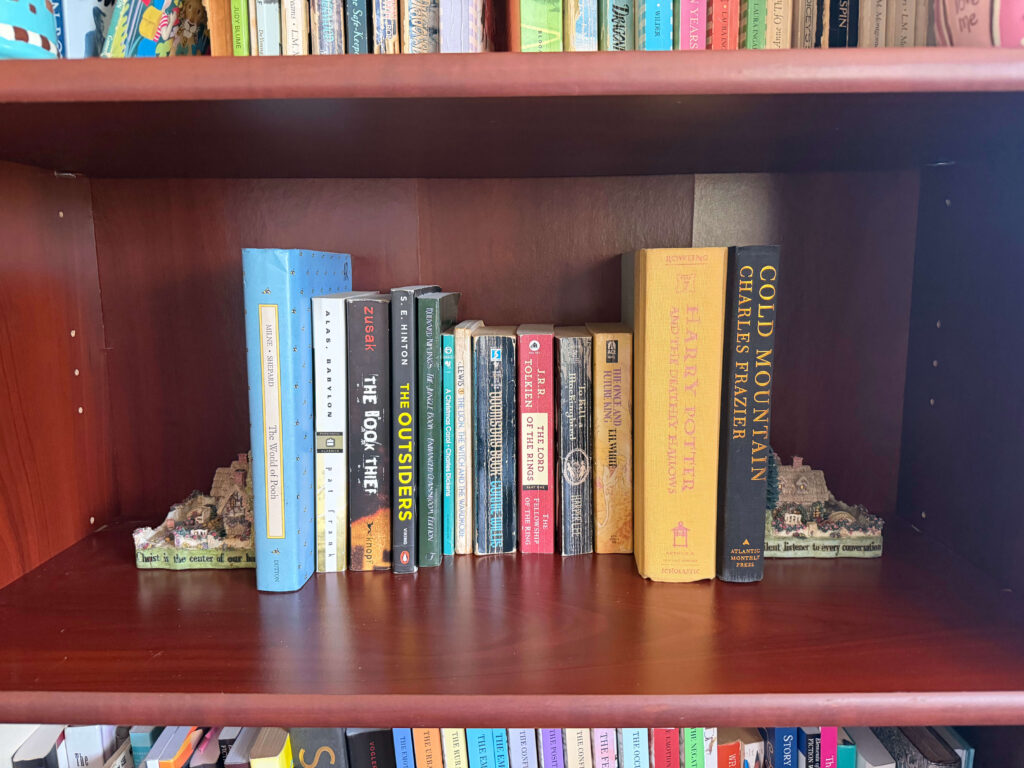
This technique—often used at the beginning and end of a story—can be powerfully applied to individual chapters. It involves featuring a statement, location, or scenario at the start of the chapter (or towards the start), then referencing it again at the end. Bookending creates a sense of serendipity as readers are brought full circle, back to where they began—but this time, with more insight into the repeated reference.
A Man Called Ove is largely about a character learning to live after suffering a monumental loss. Early in chapter 14, the author writes:
Ove had never been asked how he lived before he met her. But if anyone had asked him, he would have answered that he didn’t.
What comes next is a flashback of his first date with the woman who would become his wife, followed by a fast-forward snapshot of their forty years together that concludes with her death. And then the chapter closes in beautiful bookend fashion.
But if anyone had asked, he would have told them that he never lived before he met her. And not after either.
These devices add layers to our writing that go much deeper than the surface level, and readers are sucked in as they seek to figure out what’s really happening, what the author or character really means. So the closing of a chapter is really the perfect place to add them.
And keep in mind that this is just a sampling of the literary devices at your disposal. Light and shadow, metaphor and simile, alliteration, allegory—there are so many techniques you can use to create depth and add layers to your writing. Use them to breathe life into your chapter endings and keep readers reading.
Summary for Busy Writers: Strong chapter endings don’t have to rely solely on cliffhangers and mic-drop moments. By pairing your endings with literary devices like symbolism, theme, irony, contrast, and bookends, you can create deeper emotional resonance, increase intrigue, and encourage readers to keep turning pages.





4 Comments.
Wow. Lots of things to think about!
Right? I never thought about this until I started looking at chapter endings. I realized that if using these techniques elsewhere adds layers and extra meaning, the same is true for chapter endings. It’s a great way to leave the reader wanting more :).
I am a great fan of literary devices. They are the most fun to teach my middle grade students as they write! Thank you for this post. I am saving it to refer to often.
So glad you found this helpful, Trine! Have a great weekend!