


We thought since we’ve profiled 130 different emotions and their physical and mental cues in The Emotion Thesaurus, we’d take a look at some of the Cardinal Emotions, and some generalized differences you may see between how males and females (or those who identify with one of these genders) may react differently. These are not meant to pigeon-hole genders, just a provide a starting point. Personality always factors in heavily when it comes to emotional expression, and there are many other elements to consider.
Anger
Masculine:
Possible violent reaction: hitting, kicking, shoving, or causing damage to something as an outlet for energy
Clenched fists
Swearing
Confronting others head on
Tendency to initiate vengeance with others
Letting emotions rule immediate judgement, leading to speeding, stomping down on an accelerator & peeling out of a parking lot, making rash decisions
Internalizes anger, doesn’t talk about it
Able to move past anger eventually
Usually forgives and forgets
Feminine:
Glares
Lips pinched together
Bitterly running someone down to others
Yelling or screaming
Cat fights
Leaving the situation, stalking off
Arms crossed
Verbalizes, using words to do the damage or fight
Dark thoughts (revenge, a desire to divulge secrets or weakness to others regarding the other person involved, thinking of ways to bring them down or make them look bad in front of everyone to spread one’s own pain)
A lessened or completely broken sense of loyalty to the other person, even if previously close
May lash out at others for release
Takes a long time to move past anger
Will never forget, even though they may forgive
Love
Masculine:
Handing over control
Agreeing to make things easier/keep person happy
Gifts
Compliments
Paying for dates, meals, etc
Care-taking in certain ways: filling the tank with gas, doing certain chores they feel more suited to than their partner, taking care of things that they know the partner is not as comfortable with
Picking their partner up after work, school, or offering rides
Sharing personal interests with the partner or including them in ‘buddy events’
Apologizing when necessary or to smooth things over
Touching, holding & physical affection
Eye contact
Assuming a ‘provider role’ in ways that work within the relationship
Telling a partner, “I love you” or providing gifts
Listening
Offering shoulder rubs or massages
Playing with the partner’s hair
Giving the partner a special nickname
Feminine:
Wanting to look good for the partner
Touching/holding/being affectionate
Showing appreciation and saying thank you for helping, doing small things to make life easier, etc.
Complimenting the partner’s strengths or achievements
Providing food
Paying close attention to partner’s interest
Surprises
Asking questions about their interests and hobbies, or asking about work
Phoning or texting to stay in touch
Making sure the partner feels needed and wanted
Verbalizes their feelings
Looks for ways to spend time together
Adopts the partner’s interests as their own
Asks for advice, opinions, or help
Likes to flirt or tease
Allows the partner to do things that they could themselves because it allows the partner to feel good about being a caretaker
Fear
Masculine:
If in a group, a sudden scare might cause them to flinch toward a friend, but they are unlikely to “grab on”
Flight response if situation is beyond control, fight if it is not
Often will act “macho” or cover fear up if with others
Projects denial when teased: “I wasn’t scared–you were!”
Jerks back in shock or surprise
Will not necessarily seek out help if needed…the needed needs to be extreme
Swears or gets angry
Violence
Takes charge after initial reaction passes
Feminine:
Verbalizes fear: screams, cries, gasps
Difficulty speaking to relay what happened in the immediate aftermath
Strong instinct to protect loved ones or those younger than self
Flight response
Will huddle close to others or seek to be with people when stressed
May look to those who can protect them to do so
Will grab onto others when a sudden threat presents
Freezes
Would rather be in a group than alone
Innovative when necessary (use manipulation or distraction in order to keep self, tries to reason with a threat, will fight back if that’s the best option)
Will seek out help
Resilience
Happiness
Masculine:
Smiling
An easygoing nature
Physical contact with others
Teasing, joking, laughing
Open to anything or to try new things
Being more verbal & animated than usual
Feminine:
Speaking rapidly
Giddiness and playfulness
Touching people to feel connected to them
A radiant look
Confidence
Wanting to share the moment and feelings with others
Bubbly nature, hyperactive
Shows generosity
Confusion
Masculine:

Utilizes face expressions
Little verbal communication
Loss of confidence
A who-cares attitude
Backing off or down
Shutting down somewhat, having a difficult time processing
A loosening of body posture
Shrugging and disengaging
Feminine:
Asks questions
Verbalizes feelings
Demands clarification & more information
Exhibits ‘self-protective’ body posture: crossed arms in front of self, stepping back from others slightly to increase personal distance, death grip on whatever one is holding (if that applies)
Defends self, tries to reason or sway others to change outcomes
Surprise
Masculine:
Knee jerk reactions: jumps back, brings hands up to defend, light shove or arm punch to another after shock wears off to dispel that energy
May swear
Incapable of staying still–needs to move around to process
Uses a few words to convey surprise over and over
May not like to be surprised
Feminine:
Hands cover mouth
Pressing hand against chest
Verbalizes as they feel it
Admonishes others (but may be secretly pleased if it is a good surprise)
May sit down to process
Seeks to be with or share with others
Enjoys surprises that are a result of thoughtfulness and caring
Sadness
Masculine:
Becomes quieter
Looks for a distraction or a task to focus on
Avoids others
Does not react verbally
Seeks to be alone or may avoid people
Avoids comfort unless they are very close to a person
Questions their own role and if they failed somehow (in thoughts)
Tries to figure out a solution to the problem in order to have something to act on
If there is no solution, creating distance or denying feelings may be the response
Often can move on more quickly
Feminine:
Shows emotions (cries, shares with others, asks for comfort or gives it openly)
Verbalizes what one is feeling and thinking
Feels guilt even if there should be none
Plays the what if game
Tries to care for others
Offers comfort to others
Finds release and peace in sharing the experience and knowing others feel the same way
Tries to talk it through with others
Asks for advice
Finds comfort in another’s strength at a time of need
May struggle to pull out of this emotional state
Will take the steps to create change when time is right
—
Please Note: These are suggested generalizations for feminine-presenting and masculine-presenting, only. Each individual expresses differently, age & maturity is a huge factor, as is personality type. This list is a general idea pool for characters who may gravitate to a certain type of communication style because of the gender they identify with.
 These lists are explored to a greater degree in our bestselling resource, The Emotion Thesaurus: A Writer’s Guide to Character Expression.
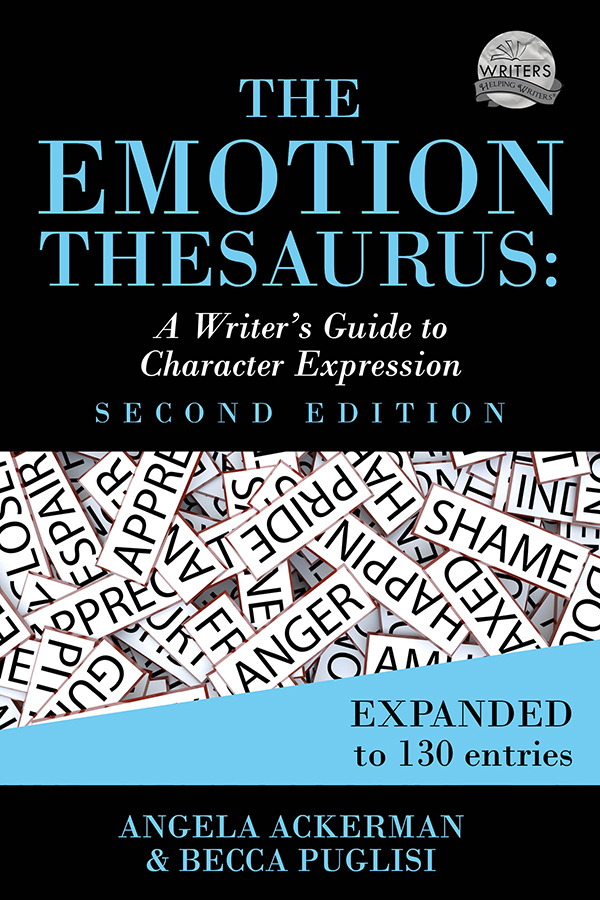 These lists are explored to a greater degree in our bestselling resource,
 Happy writing to all!





30 Comments.
[…] What is an Emotion Thesaurus? Expressing Cardinal Emotions: Male vs. Female […]
Just read the starred text at the bottom…oops. Ignore my friendly critique about these being differences in personality more than simply sex or gender based ways to emote!
And I must say, again, wonderful list!
Interesting list! Very useful too, although based on the supposed differences between “male” and “female” emotions, I’m apparently a man, even though I’m female. 🙂
I do realize you’re going for generalizations here, and of course women and men are socialized to express emotions differently. Still, it’s worth noting that these are also personality-based ways to express emotions rather than sex or gender-based differences. Just a friendly suggestion! I really do like the list!
Maybe I’m just weird and all the people I know are weird, haha, but 90% of the women I know emote like “men” and a good half of the men I know emote like “women” according to the list. 🙂
Happy Blogoversary!! And what a gift for us. Your resources are just amazing. Thanks for another extremely useful post. :-0
This post is LEGIT! 🙂 Thanks so much! (Found your blog through Stina Lindenblatt’s links.) *goes to click the follow button and RSS Feed url*
Excellent post, I’m printing this list out for checking my emotions in my WIP – thanks!
Many thanks! *blushes* I’m glad you found your way here. 🙂
Well, Muses, I think you’ve surpassed all reference tools I’ve found in 30 years of writing. This is a most comprehensive and useful website for a writer. I will tell all my writer friends about it. We ALL “need” it, and I thank you for making this information available to us all. If you ever decide to publish it in a book or books, I’ll be the first in line to buy them.
I just found your blog. This is marvelous. I’ll be reading and taking notes for days – thank you so much for doing all this. I have added a link to you in my sidebar!
http://www.delenemartin.com
Bonne Fête!!
Thanks for all your hard work here at The Bookshelf Muse!
Happy birthday, Bookshelf Muse! I want to let you guys know that I’m tagging EACH of you for the “six things that make me happy” meme. My post was here, at http://headdeskforwriters.blogspot.com/2009/01/ralfast-over-at-neither-here-nor-there.html
Smile,
-CA
Awesome! I’m totally going to use these.
Happy Anniversary!
Only a year? You’ve achieved so much in that time! Congratulations on a great blog and a great resource. Happy Anniversary.
Happy Anniversary! What a great post!
Happy anniversary! My protagonists are always expressing their surprise by hands to mouth, wide open eyes, etc. I need to come over here more…
Thanks so much for all the props, people. It’s so good to hear when we’re on track, and also when we’ve gone over the edge, lol 😉
Happy anniversary, ladies!
Your thesauruses look like wonderful writing tools.
Cheers to this next year!
Congrats on the anniversary, and thanks for the wonderful posts!
This is one of the most useful blogs out there. I love you guys and I constantly refer back to it while writing. Thanks again!
Happy Anniversary!!! *happy dance* 🙂
Thanks for the past year ladies! Your blog that could definitely has! Happy Birthday Bookshelf Muse!
Happy Anniversary!!!! Thnx for all the great posts!
Christy
You guys are awesome! Congrats on the year mark!
And really cool addition to the thesaurus. 🙂
Now that is an anniversary post!
Thanks everyone! And Emina, I know what you mean. Some of them seemed crazy to write down, but for certain age groups/maturity levels, it really is true!
Happy Anniversary!
*snickers* I found the male/female comparisons slightly hilarious. 😛
“HAPPY ANNIVERSARY,” gals! I love your blog. And, as usual, today you have given me much to think about. XOXO
Oh my word! AWESOME post! 😀 Thank you for providing a fanatastic writing resource 🙂
W0W!!!! Wonderful post!!!! And Congratulations on completing your first year!!!! May there be many more!!!!
(Says she after using an over abundance of exclamation points!)