Have you ever gone to a new restaurant, ordered a burger, and discovered it has some sort of luscious, zippy sauce that elevates the entire meal into the ecstasy zone? Amazing, right?
Well, Becca and I call conflict a story’s “secret sauce” because it does the same thing – elevates the situation in a way that makes the reading experience even better.
Conflict = Uncertainty = Reader Interest
Conflict represents a problem, struggle, or challenge, that suddenly renders the outcome uncertain. And when you take certainty away, readers worry…and that keeps them flipping pages until the world evens out again.
Good writers make sure to prolong that uncertainty as long as possible, creating an uphill battle for the protagonist as he or she climbs toward what they want most: their goal in the story.
Ah, delicious conflict. It gets the blood pumping and we’re always looking for ways to add more of it. Sure, part of it is that we writers are a little evil, but it also ups the ante.
Relationships + Work = More Conflict
Thankfully, a character’s occupation is ripe with opportunities for clashes and upset, especially when it comes to their relationships with other people. Relationship friction comes in a thousand flavors: power struggles among competitive employees, or between the boss and her subordinate.
Maybe your character spends too much time at work and so relationship struggles happen on the home front because their spouse is shouldering the biggest load when it comes to the kids. And speaking of those sticky, jelly-handed darlings…what happens when Mom has to stay home and take care of little Jimmy who jumped off the shed and broke his ankle the same day she’s supposed to present the budget to the executive team at work?
There are so many ways that a character’s personal life can collide with their professional one, resulting in painful fireworks. Today let’s look at one specific type of relationship conflict straight from The Occupation Thesaurus: A Writer’s Guide to Jobs, Vocations, and Careers.
The Land of Bad Decisions: Workplace Romances
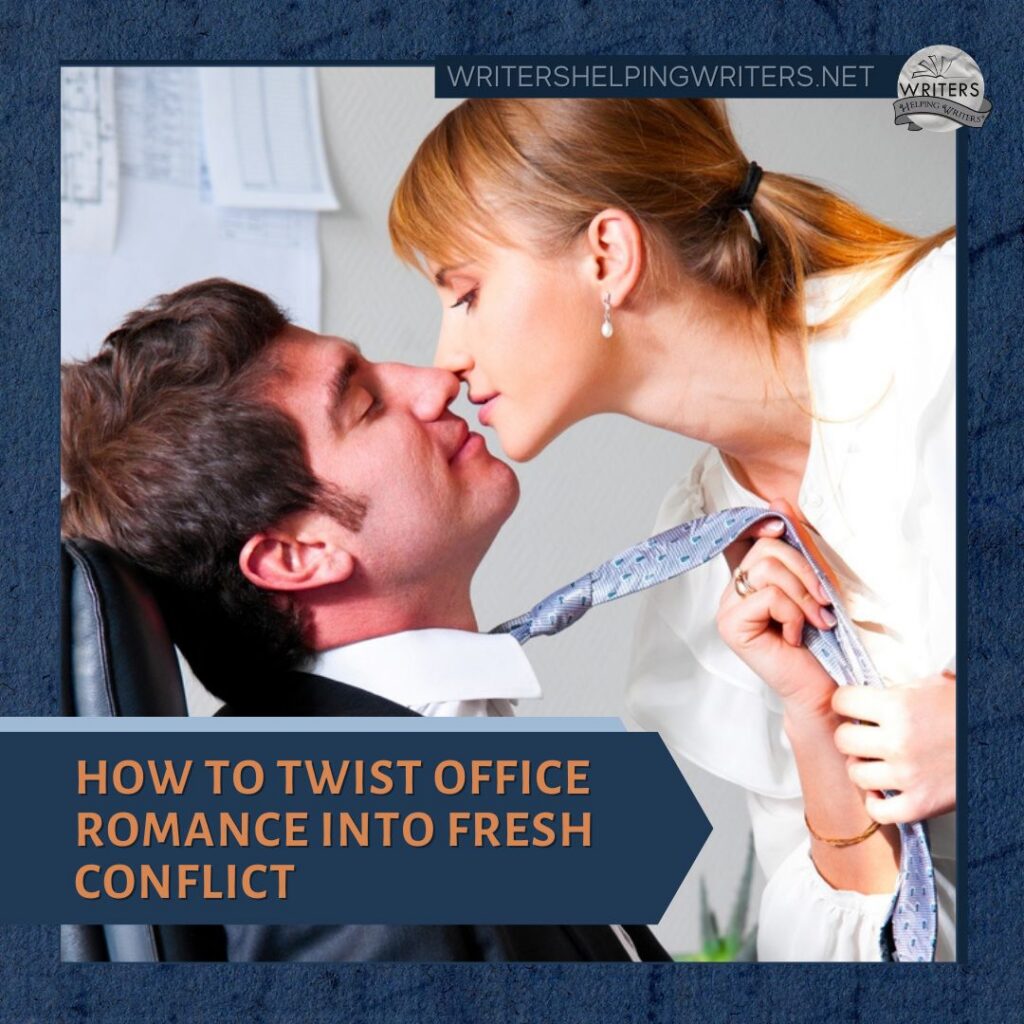
A common trope in fiction is the office romance, when the lines between personal and professional relationships blur. Long, late nights trying to meet a deadline or a desire to cut loose at the conclusion of a successful project can lead to bad decisions, such as an impromptu tryst with a co-worker or inviting the boss’s hunky assistant into the boardroom for something other than dictation.
Office romances are usually forbidden for good reason—they produce unwanted drama. And when the sparks inevitably fizzle, everyone else may need chainsaws to cut the tension, which could undermine the unity and teamwork needed for your character to achieve her goals.
Office Romance Conflicts
Another problem with these relationships is that both parties don’t always end up on the same page. For one, the break room booty is all fun and games, but for the other it may become serious.
If a careless “I love you” or “When are you going to leave your husband?” spills out, a cold breeze might blow in. The lovestruck whispers change to “We should really stop” and “This was fun, but let’s keep it professional from here on out.”
Heartbreak is never easy, but when you’re forced to see and work with the person who discarded you, it can lead to resentment, anger, and the desire for revenge.
Office Romances: Stereotypes and Twists

With bad breakups at work, the possibilities are endless for delicious conflict. Some staples, such as career sabotage, blackmail, and threats to tell the wife, are often used because they work. But instead of replaying the same old recording, add a twist that readers haven’t seen.
What if the jilted love interest threatens to tell the boss’s angst-ridden teenage kid instead of his wife? Ouch. And it would take a special kind of vengefulness to bypass family members and hand evidence of the affair to the chin-waggers at his church.
Sharpen your imagination to come up with creative ways to get even and remember that sometimes small cuts cause the most damage.
4 Ways to Twist the Office Romance Conflict
No matter what type of relationship friction you’re playing with, stretch yourself to think of ways to make that conflict scenario fresh:
- Twist the Same-Old:
What types of relationships at work would be forbidden, and why? - Raise the Stakes:
What if an employee is not just getting it on with the boss, but also the boss’s wife? - Introduce a Puppeteer:
What if the office romance is a set up from the get-go, perhaps orchestrated by one brother who doesn’t want to see his sister take over the company. Only she sees it coming and becomes the puppeteer… - Deliver the Unexpected:
Office romances often explode, sending shrapnel in all directions. What if it the opposite happens and instead leads to a shocking happily ever after?
Don’t be afraid to get creative, and if there is fallout, make it count. Drop your character from the trapeze with no safety net in sight.
If you want more ideas for work-related conflict (and you know you do), check out The Occupation Thesaurus: A Writer’s Guide to Jobs, Vocations, and Careers. And to see one of the jobs we profile, zip over to this entry on FIREFIGHTERS.

In addition to guidance on choosing and using occupations with intention, each entry provides insight into:
- An overview of a job, including duties, responsibilities, and training
- Skills and traits needed to perform it well
- Typical pressures, risks, and ethical challenges
- Likely workplace conflicts and complications
- How a career can affect self-image, reputation, relationships, and cause unmet needs
- Plot-worthy ideas as to what this job means to a character and why
With a wide range of jobs, vocations, and careers covered, this thesaurus gives writers a way to integrate a character’s work in ways that feel authentic, purposeful, and story-relevant.
Don’t make your character’s work a footnote–use it to characterize and become a catalyst for friction, conflict, and personal growth.