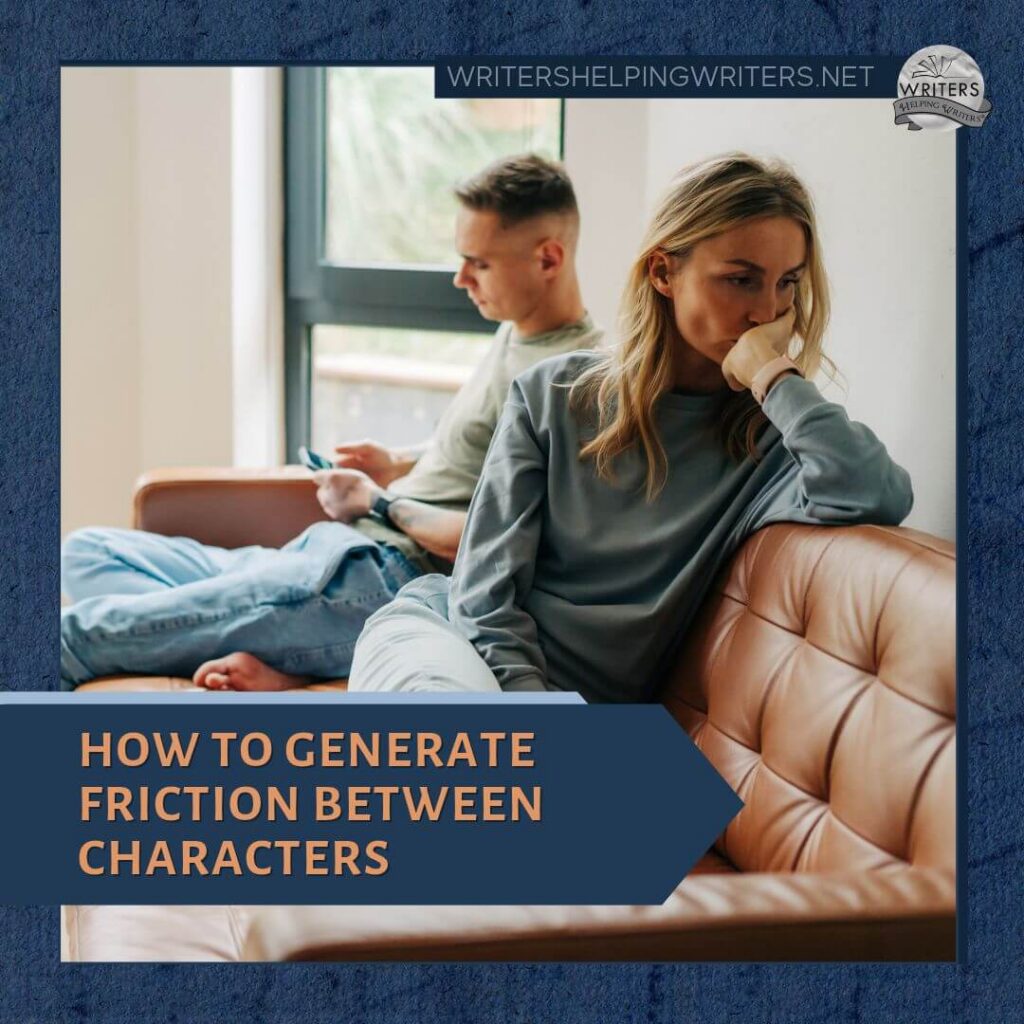
Do unsuited people find themselves drawn together in a way that defies logic? Do they make the best love matches? Opinions abound, but no one knows for sure. However, if there is one certainty as far as fiction goes, it’s that conflicting personalities cultivate friction, and that can lead to explosive conflict.
As writers, we thrive on friction, infusing it into every possible aspect of the story. Because relationships are important in the real world, they’re a natural way to introduce and increase tension for the protagonist. Their relationships, whether they’re helpful, harmful, or somewhere in between, supply fertile ground for friction.
Conflicting personalities rub against one another, allowing writers to maximize moments when characters come together. After all, if everyone in the scene plays well together, the story gets boring quickly. With a bit of character planning to match up clashing personality traits, it’s easier to make the sparks fly.
The Character Foil
One way to use the power of opposites is through a foil: a character who acts as the opposite of the hero on many levels or in one defining way. If the protagonist is focused, organized and humble, the foil might be a scatterbrained, disorganized loudmouth. The hero may be decisive while the foil is contemplative, or when the hero demands action, the foil advocates caution, and so forth.
Using a foil supplies tension to scenes where the two characters are present, and the negative traits of one can highlight the other’s strong qualities through contrast.
Foils can be great for friction, but sometimes the author needs to be a bit more subtle. Maybe the goal isn’t to have someone clash frequently with the protagonist or play his exact opposite, but more to create a very specific tug-of-war.
Choosing Specific Traits to Play Off One Another
Digging into each character’s personality might unearth some great areas for clashes. The obvious choice is to pit one character’s attribute against another’s flaw (responsible vs. irresponsible, or easygoing vs. controlling, etc.) but readers might expect this. Why not try something more unique? After all, not all positive attributes get along, and neither do flaws.
Take Alan, a hard working auto technician who just became the co-owner of a small detailing shop. He’s a friendly, intelligent guy, but he’s got a short fuse because of his disapproving father-in-law, who isn’t shy about letting Alan know that his daughter could have done better.
Now imagine a client driving his Mercedes into the shop after hours, demanding that a minor ding be taken care of RIGHT NOW. Alan explains that the shop is closed and he can handle it in the morning, which the customer doesn’t appreciate. He makes things personal, hinting that Alan and his tin can shop should be grateful for the business. Things escalate until Alan fires back with some insults of his own and the customer leaves in a huff—with a heated promise to destroy the shop’s reputation.
Here, we see pretentiousness facing off against someone who’s defensive and maybe a little insecure. The contrasting flaws slam together with a bang, and create conflict.
Attributes can work the same way. To test this out, team up your proper character with an uninhibited one—cautious vs. spontaneous, logical vs. sentimental…the friction options are endless.
Go Deeper to Show the ‘Why’
Sometimes there’s more to friction than conflicting personality traits. Chances are, if a character quickly bristles at a friend’s unsolicited advice or gets upset at an independent decision her co-worker made on a shared project, there’s a reason: she was triggered. Something about this experience reminded her of a past one.
What might explain her reaction? Maybe she grew up with a controlling father who dictated what she could and couldn’t do the the extreme, or she launched a cupcake business with someone who always picked apart her cakes. Whichever it was, alarm bells go off when she perceives criticism, or feels she’s being ignored or pushed aside.
Painful experiences are hard to forget. Because we have a tendency to fear they could happen again, we’re ever watchful for signs. Characters will be, too.
When you’re considering which traits will cultivate friction, think about what fears and emotional wounds will explain them being oversensitive or quick to assume something negative. Not only will this make their reaction seem more authentic, it also makes the character’s predicament relatable. Readers struggle with separating the past from the present, too, and know what it’s like to be easily triggered by something because of it.
Friction Isn’t All Bad

Remember that friction between characters can also be a good thing. Attraction, desire, love, and lust supply the heartbeat to many a novel. Anticipation can be nerve-wracking in a good way, and competition often spurs characters on to do their very best. So whether friction is a healthy manifestation of desire and need or it’s filled with unhealthy disagreements, power struggles, and the quest to dominate, readers are pulled in.
Take some extra time when you’re building your cast of characters. Think carefully about how you can utilize incompatible or competitive personality traits. The resulting friction will quicken the pulse of your story, allowing you to build tension until those traits finally clash, in good ways and bad.
Summary for Busy Writers
Learn how to use conflicting personality traits to cultivate friction, create relationship conflict, build tension, and provide a window into a character’s past for deeper-level characterization.
Reminder…
This is a great time of year to save some money while investing in yourself and the things you need as a writer. Becca and I have two Black Friday deals on until November 30th:
Save 35% on a 6-month subscription to One Stop for Writers®
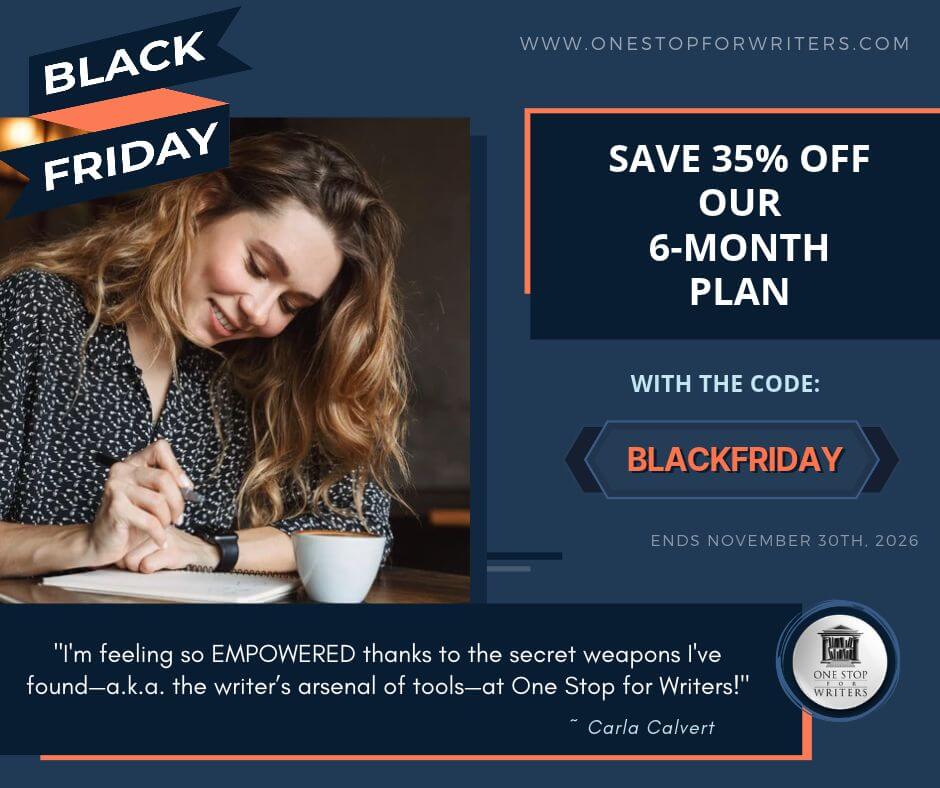
Access all the tools and resources you need to plan, write, and revise your novel, including our 20-topic Story Development Database (THESAURUS), Character Builder, Storyteller’s Roadmap, and other helpful resources.
Find out more about this BF deal.
Save 25% on all Writers Helping Writers® digital titles (singles only)

The economy is hard on everyone right now, and one great thing about having our own store is that we can tighten our margins a bit more. So, if you need help in a particular area of writing, give our bestselling guides a look. We released a new book this year, too: The Fear Thesaurus: A Writer’s Guide to What Holds Characters Back.
Find out more about this BF deal.
Happy writing, all!